
-
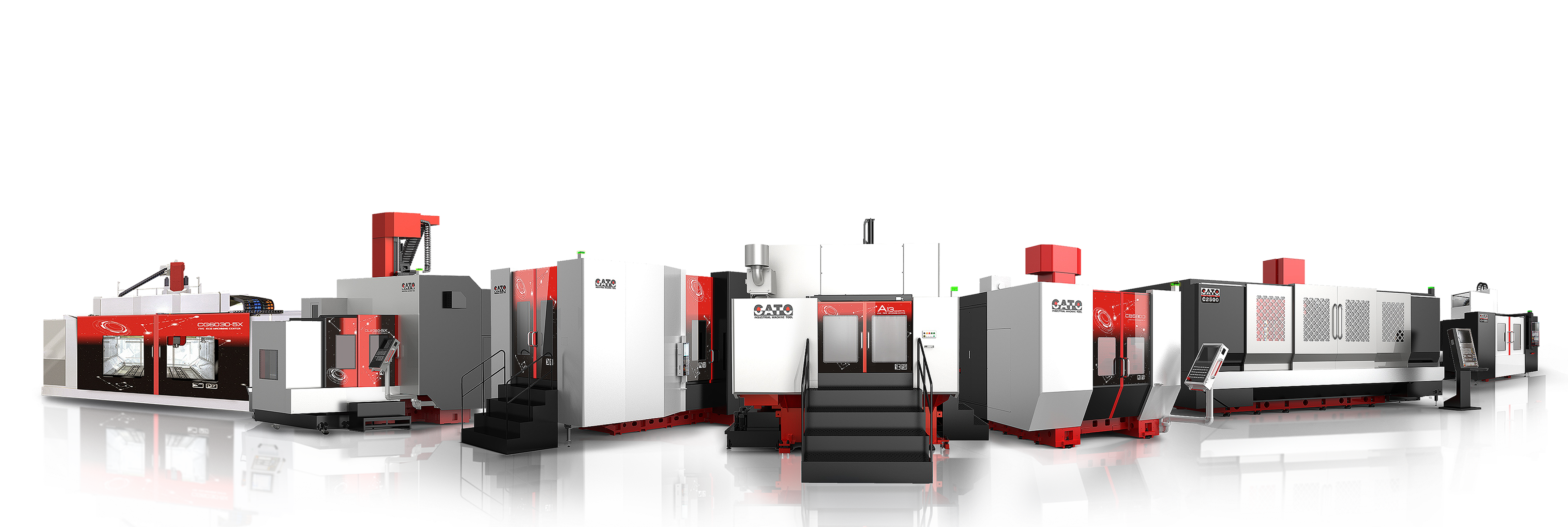
CL Series High Speed Vertical Machining Center CL Series High Speed Gantry Machining Center CHS Series High-speed Removal Machining Center CS Series Gantry Machining Center CT Series Drilling & Milling Machining CenterCP Series Five-axis Horizontal Swing Head Machining Center GF Series Five-axis Fixed Beam Gantry Machining Center CBS Series Five-axis Bridge Machining Center CV Series Five-axis Vertical Machining Center A Series Five-axis Horizontal Cradle Machining Center C Series Five-axis Column Vertical Machining Center GE Series Five-axis Crane Machining Center


Vertical vs. Horizontal Machining Centers: Which Is Better for Your Production Line?
Release time:
2026-03-27
Author:
CATO
Source:
Internet
Vertical and horizontal machining centers are core equipment in mechanical manufacturing, with significant differences in structure, performance and application scenarios. Proper selection directly affects production efficiency, cost and product quality. This paper compares their characteristics, advantages and limitations from multiple dimensions, and provides clear and practical references for production line selection based on key factors such as part type, batch size and budget.


What are the differences between vertical machining center and horizontal machining centers? How does machine structure affect machining performance? Which type offers higher efficiency and better cost-effectiveness? What key factors should you consider before selection?
Choosing the right machining center directly impacts productivity and profitability. The core of selection is to match actual application needs. Enterprises should fully compare vertical and horizontal models, and evaluate gantry machining centers as alternatives for optimal decision-making.This article clearly explains the core differences between vertical and horizontal machining centers in terms of structure, performance, compatible parts, applications, cost, space, maintenance, automation, and selection guidelines.

Key Takeaways
- Vertical Machining Centers (VMC) feature a vertical spindle, suitable for flat parts and small-batch production, with a smaller footprint.
- Horizontal Machining Centers (HMC) feature a horizontal spindle, ideal for complex parts and high-volume production, requiring more floor space.
- HMCs provide better chip evacuation; chips fall naturally by gravity, improving surface quality and extending tool life.
- VMCs have a lower purchase cost; HMCs require higher initial investment but deliver better long-term savings for high-volume lines.
Selection criteria: part shape, production volume, budget.
1.Vertical Machining Center (VMC)

The Vertical Machining Center (VMC) features a vertically oriented spindle that moves along the Z-axis. The workpiece is typically secured on a worktable, which moves along the X and Y axes. This configuration allows the cutting tool to approach the workpiece from above. Its operation involves the following key steps:
1.1 Working Principle
- Workpiece clamping: Secure and align the workpiece, then install the proper cutting tool.
- Program input: Enter tool path, spindle speed, feed rate, cutting depth, and other parameters.
- Machine movement: The control system drives the table and spindle to bring the tool into contact with the workpiece.
- Machining execution: Perform cutting as programmed, with real-time monitoring and adjustment.
- Automatic tool change: Change tools automatically as needed for continuous machining.
- Completion: Stop the machine, remove and inspect the finished part.
1.2 Advantages
- High versatility: Performs tapping, drilling, milling, and turning.
- Wide material compatibility: Processes fiberglass, aluminum, brass, copper, steel, etc.
- Stable precision: CNC control ensures high accuracy and consistency for tight-tolerance complex parts.
- Automated efficiency: Reduces manual intervention, improves productivity, and lowers scrap rates.
- User-friendly: Good visibility, simple programming and clamping, short setup time.
1.3 Limitations
- Limited stability and space for long or heavy workpieces.
- Restrictions on workpiece size and load capacity; overloading reduces accuracy and accelerates wear.
- Poor chip evacuation: Chips accumulate on the workpiece, causing re-cutting, surface damage, and shorter tool life.
- Low efficiency in high-volume production: Long idle time for loading, unloading, and setup reduces spindle utilization.
- Standard 3-axis VMCs only machine top and side surfaces; multi-side machining requires re-clamping, harming accuracy and efficiency.
2.Horizontal Machining Center (HMC)

2.1 Working Principle
The Horizontal Machining Center (HMC) has a horizontally oriented spindle, cutting from the side of the workpiece. It is usually equipped with a dual pallet changer, allowing loading on one pallet while machining on the other, greatly reducing idle time. The horizontal spindle uses gravity for chip removal, avoiding chip interference and improving surface quality.
2.2 Advantages
- Higher precision: Rigid structure and stable workpiece support; rotary table enables multi-side machining in one setup.
- High productivity: Smooth chip removal, multi-axis linkage, and automatic tool change deliver faster cycle times and higher output.
- Longer tool life: Better heat dissipation and stable cutting reduce wear and replacement costs.
- Wide material adaptability: Machines aluminum, steel, titanium, and composite materials.
- Excellent for complex parts: One-setup multi-side milling, boring, and drilling; ideal for aerospace, new energy vehicles, and other high-precision fields.
2.3 Limitations
- Higher purchase and maintenance costs than VMCs.
- More complex installation and commissioning, requiring professional skills and extra time.
- Larger footprint and more complex structure, making programming and maintenance more difficult.
- Higher fixture and tooling costs; simulation software is often required for safe operation.
- Demands higher operator skill levels.
3. Part Complexity and Size Comparison
3.1 Suitable Parts for VMC
Flat, plate, and box-type parts ideal for top-side drilling, tapping, and milling.
Parts with planes and cavities; multi-axis VMCs handle complex structures.
Typical applications: Robot arm joints, humanoid robot arms, robot rear head components, drone tails, drone body structures, drone tail connecting beams, vibration plates, aerospace structural parts, aerospace latches, etc., widely used in emerging high-end equipment industries.
3.2 Suitable Parts for HMC
Complex box and frame parts requiring multi-side machining in one setup.
Large, heavy workpieces capable of withstanding heavy loads and aggressive cutting.
Parts requiring high chip evacuation (e.g., aluminum parts); gravity-assisted chip removal is highly effective.
Typical applications: Engine blocks, transmission housings, large structural brackets, etc.
4. Production Volume and Efficiency
4.1 VMC: For Small to Medium Batches
- 1–5,000 pieces/year: Standard manual VMC operation.
- 5,000–15,000 pieces/year: Dedicated fixtures and optimized tool paths required.
- 15,000–25,000 pieces/year: Automation and lights-out operation needed.
- Over 25,000 pieces/year: Stamping, casting, etc., are more economical.
4.2 HMC: For High-Volume Production
- Equipped with automatic pallet changers for simultaneous loading and machining, maximizing spindle utilization.
- Multi-side machining in one setup drastically shortens cycle times for continuous, efficient production.
- Widely used in automotive, aerospace, and other high-volume precision manufacturing.
5. Cost and ROI
5.1 Initial Investment
- HMCs cost significantly more than VMCs due to complex configurations (pallets, tool magazines, heavy-duty structures).
- HMCs have higher installation costs, larger footprints, and more complex commissioning.
5.2 Operating Cost and Long-Term ROI
- HMC: Higher tooling and fixture costs, higher power consumption, but lower per-part labor cost, longer tool life, and lower overall cost in mass production.
- VMC: Lower upfront and tooling costs; better for small-batch, mixed-type production with faster payback.
6. Floor Space and Workshop Layout
6.1 VMC
Compact structure, small footprint; ideal for limited factory space and dense layout.
6.2 HMC
Wider design; pallet systems require extra space. Maintenance access and material handling space must be reserved in layout planning.
7. Accuracy, Surface Finish and Chip Management
7.1 VMC Accuracy
VMCs typically achieve stable positioning accuracy of ±0.005/300mm and repeat positioning accuracy of ±0.003/300mm.
7.2 HMC Chip Evacuation Advantage
Horizontal spindle allows chips to fall naturally, preventing re-cutting, extending tool life, improving surface quality, and maintaining long-term dimensional stability.
8. Automation and Integration Capability
8.1 VMC Automation
Compatible with CAD/CAM, automatic tool changers, pallets, and robotic loading/unloading; improves spindle utilization for flexible manufacturing.
8.2 HMC Advanced Automation
Supports multi-pallet systems for long-duration unattended (lights-out) production. Integrates with plant-wide automation scheduling, perfect for highly automated lines.
Conclusion
There is no absolute superiority between vertical and horizontal machining centers. Selection should be based on part type, production volume, budget, and workshop conditions to match machine capability with production needs for optimal manufacturing results.
FAQ
1.What is the core difference between VMC and HMC?
VMC has a vertical spindle (top-down cutting); HMC has a horizontal spindle (side cutting), affecting chip evacuation, space, and machining range.
2.What parts are suitable for VMC?
Flat and plate parts, mainly single-side machining; ideal for small batches, prototypes, and mixed production.
3.Why is HMC better for high-volume production?
Automatic pallets and one-setup multi-side machining minimize idle time, maximize spindle utilization, and support long unattended runs.
4.How important is chip evacuation for selection?
Critical. HMC uses gravity for excellent chip removal; VMC tends to accumulate chips, shortening tool life and degrading surface quality.
📩【Email】:marketing@catocnc.cn
📞 【Consultation Hotline】:0769-38825288
🌐 【Official Website】:https://en.catocnc.com
🔗【Product Details】:https://en.catocnc.com/product.html

Key words:
Previous Page
Latest information

Official Wechat
Mobile phone official website
Online Message
Leave your contact information and needs, we will arrange for professionals to contact you
Quick Navigation
Contact Us
Add.: No.1, Dongye Road, Houjie Town, Dongguan City, Guangdong Province, China
Tel: +86-769-38825288
WeChat: CATO54321
Fax: +86-769-38825138
E-mail: marketing@catocnc.cn
Web: http://www.catocnc.com
Service Hotline: +86-400-680-6638