
-
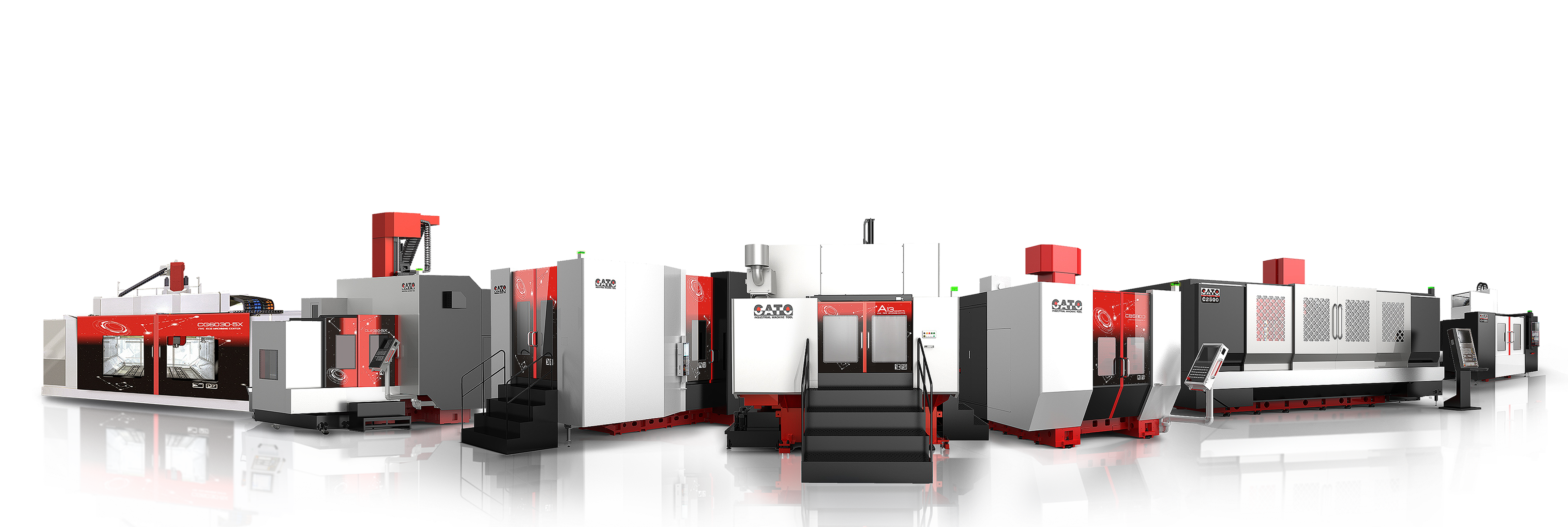
CL Series High Speed Vertical Machining Center CL Series High Speed Gantry Machining Center CHS Series High-speed Removal Machining Center CS Series Gantry Machining Center CT Series Drilling & Milling Machining CenterCP Series Five-axis Horizontal Swing Head Machining Center GF Series Five-axis Fixed Beam Gantry Machining Center CBS Series Five-axis Bridge Machining Center CV Series Five-axis Vertical Machining Center A Series Five-axis Horizontal Cradle Machining Center C Series Five-axis Column Vertical Machining Center GE Series Five-axis Crane Machining Center


Application of 5-axis CNC Machining Centers in the Manufacturing of Precision Optical Components
Release time:
2026-03-19
Author:
CATO
Source:
Internet
The upgraded optoelectronic information industry sets higher demands for precision optical component manufacturing, which traditional processing equipment cannot meet. Boasting multi-degree-of-freedom linkage and high-precision motion control, 5-axis CNC machining centers have become the core equipment. CATO specializes in R&D and manufacturing of high-rigidity, high-precision 5-axis CNC machining centers. This paper explores its core application value, technical advantages and key process points in this field, offering professional industry references.


In the era of rapid iteration of the optoelectronic information industry, precision optical components serve as the core basic devices for optical imaging, laser communication, photoelectric detection and other equipment. Their machining accuracy, surface quality and structural complexity directly determine the performance upper limit of terminal optoelectronic equipment. Restricted by motion dimensions, traditional 3-axis CNC machining equipment has such problems as multiple clamping times, accumulated positioning errors and poor adaptability to curved surface machining when processing complex curved surface and polyhedral optical components, which can no longer meet the manufacturing requirements of high-end optical components. Relying on the core technical characteristics of multi-degree-of-freedom linkage, high-precision motion control and one-time clamping for full-process machining, 5-axis CNC machining centers have become the core processing equipment in the field of precision optical component manufacturing, effectively breaking through the bottleneck of traditional machining technology and providing solid technical support for the high-precision, high-efficiency and large-scale production of high-end optical components.

I. Technical Core of 5-axis CNC Machining Centers Adapting to the Manufacturing of Precision Optical Components
Centered on the multi-degree-of-freedom linkage of X/Y/Z three linear axes and A/B/C two rotary axes, 5-axis CNC machining centers achieve precise adjustment of the multi-dimensional attitude between cutting tools and workpieces, and their core technical advantages are highly consistent with the manufacturing requirements of precision optical components. Most precision optical components are made of brittle materials such as optical glass, single crystal sapphire and infrared optical crystals, and are mostly designed with aspherical, free-form and polyhedral composite structures, which impose stringent standards on positioning accuracy, trajectory control and surface damage control during machining. Through technologies such as multi-axis linkage interpolation control, high-precision grating ruler closed-loop feedback and real-time error compensation of the CNC system, 5-axis CNC machining centers can achieve micron-level even submicron-level machining accuracy control. Meanwhile, they can complete the full-curved-surface and multi-directional machining of components with one-time clamping, fundamentally reducing the accumulation of positioning errors caused by multiple clamping and ensuring the consistency of machining accuracy. In addition, 5-axis machining centers can adjust the optimal cutting attitude of cutting tools, keeping a reasonable cutting angle between the tool and the machined surface of the workpiece at all times, effectively reducing defects such as chipping and microcracks in the machining of brittle optical materials and improving the surface machining quality of components.
II. Core Application Advantages of 5-axis CNC Machining Centers in the Manufacturing of Precision Optical Components
(1) Multi-degree-of-freedom coordinated machining for high-precision forming of complex curved surfaces
The aspherical and free-form surfaces of precision optical components are key structures to improve the imaging quality of optical equipment and reduce the volume of equipment. Their curved surface contours have no fixed mathematical models, leading to great difficulty in machining trajectory control. By integrating the linkage control of three linear axes and two rotary axes, 5-axis CNC machining centers can complete the machining path planning and multi-axis interpolation operation of complex curved surfaces through the CAM system, accurately restore the contour accuracy of the designed curved surfaces, and strictly control key indicators such as surface shape error and roughness of the curved surfaces. Taking the machining of aspherical reflectors and free-form surface lenses as an example, 5-axis machining centers can realize constant cutting depth machining of the cutting tool along the normal direction of the curved surface through the flexible adjustment of the rotary axis, achieving micron-level surface topography control with the surface shape accuracy controllable within λ/20 (λ is the wavelength of visible light), which is far superior to the machining effect of traditional 3-axis machining equipment and effectively ensures the imaging and light transmission performance of optical components.
(2) High-precision motion control to ensure the stability of machining accuracy and surface quality
Precision optical components have extremely high requirements for surface quality. Tiny cutting textures, surface scratches and excessive roughness will directly affect their optical performance. 5-axis CNC machining centers are equipped with a high-precision grating ruler position feedback system and a high-rigidity machine bed structure, which can realize real-time correction of the motion trajectory and effectively suppress machining errors caused by machine tool vibration, guide rail clearance and other factors during machining. At the same time, combined with high-precision machining accessories such as high-speed electric spindles and diamond tools, they can achieve high-precision cutting with high rotation speed, small cutting depth and fast feed rate, greatly reducing the surface roughness of optical components and controlling the surface roughness Ra value of components below 0.02μm, meeting the stringent requirements of optical components for light transmittance and diffuse reflection suppression. In addition, the CNC system of 5-axis CNC machining centers is equipped with thermal error compensation and geometric error compensation functions, which can effectively offset the accuracy drift caused by temperature changes and parts wear during machine tool machining, ensuring the consistency of the accuracy of optical components in mass machining.
(3) One-time clamping for full-process machining to improve machining efficiency and reduce process errors
When processing polyhedral and composite curved surface optical components, traditional 3-axis machining equipment requires multiple clamping and repositioning, which not only increases production working hours but also easily causes accumulated errors due to the deviation of positioning benchmarks, leading to excessive positional tolerance of components. 5-axis CNC machining centers can complete the full-process machining of workpieces with one-time clamping, covering all machined surfaces of components through the 360° rotation and swing of the rotary axis without manual intervention for repositioning, greatly shortening the production cycle and improving machining efficiency. Taking the machining of polygonal prisms, optical cavities and other components as an example, 5-axis machining centers can complete the machining of all processes such as planes, hole systems, curved surfaces and chamfers of components in one clamping, shortening the machining working hours by more than 30%. At the same time, the positioning error is controlled at the micron level, ensuring the positional accuracy between each machined surface of the component and meeting the assembly and use requirements of optical components.
(4) Strong adaptability to the machining of multi-material optical materials to expand the manufacturing boundary of optical components
The manufacturing materials of precision optical components cover optical glass, quartz glass, single crystal sapphire, silicon carbide, infrared optical crystals (such as germanium and silicon), etc. Different materials have significant differences in physical properties and different requirements for machining processes. 5-axis CNC machining centers can realize efficient machining of different optical materials through flexible adjustment of machining parameters, adaptive selection of special tools and precise optimization of cutting methods: for brittle materials such as optical glass and quartz glass, diamond tools are used for ultra-precision cutting with low cutting speed and small cutting depth process parameters to reduce material chipping and microcracks; for hard and brittle materials such as single crystal sapphire and silicon carbide, ultrasonic vibration cutting technology can be combined to improve material removal efficiency and machining surface quality; for infrared optical crystals such as germanium and silicon, the tool path and cutting parameters are optimized to avoid plastic deformation of materials during machining and ensure the optical performance of components. This multi-material adaptability effectively expands the manufacturing boundary of precision optical components and meets the manufacturing demand of the optoelectronic industry for new optical components.
III. Key Points of Process Implementation of 5-axis CNC Machining Centers in the Manufacturing of Precision Optical Components
(1) Precise planning of machining processes and optimization of parameters
Most optical materials are hard and brittle materials that are prone to surface damage during machining. Therefore, targeted process planning should be carried out according to the material characteristics, structural forms and accuracy requirements of components. First, optimize the design of the machining path through the CAM system to avoid sudden stop and sudden rotation of the tool and reduce machining impact; second, select cutting parameters reasonably and control indicators such as cutting speed, feed rate and cutting depth to realize micro-precision cutting; finally, adapt special precision machining tools such as diamond turning tools and diamond milling cutters to ensure the sharpness and machining accuracy of the tools and reduce machining errors caused by tool wear.
(2) High-precision calibration and daily maintenance of equipment
The positioning accuracy of the rotary axis, the rotation accuracy of the spindle and the geometric accuracy of the machine tool of 5-axis CNC machining centers are the basis for ensuring the machining accuracy of optical components. Therefore, a scientific equipment accuracy calibration mechanism should be established. Regularly detect and compensate the straightness, perpendicularity and rotary axis positioning accuracy of the machine tool through precision testing equipment such as laser interferometers and ball bar instruments; regularly check the operation status of key components such as grating rulers, servo motors and guide rails, and carry out maintenance and replacement in a timely manner; at the same time, maintain a constant temperature and humidity machining environment and control the ambient temperature at 20±0.5℃ to avoid thermal deformation of the machine tool and workpiece caused by temperature changes and ensure the stability of machining accuracy.
(3)On-line detection and error compensation in the machining process
High-end precision optical components have extremely high machining accuracy requirements, so on-line detection and real-time error compensation need to be carried out during the machining process to realize an integrated process of machining-detection-compensation. By equipping 5-axis CNC machining centers with on-line detection devices such as laser probes and contact probes, the machining size and surface shape accuracy of the workpiece are detected in real time, and the detection data is fed back to the CNC system, which automatically corrects the machining path and cutting parameters to realize real-time error compensation, effectively improving the machining accuracy and qualified rate of optical components.
IV. Development Trend of 5-axis CNC Machining Centers in the Field of Precision Optical Component Manufacturing
With the development of the optoelectronic industry towards high resolution, miniaturization and integration, the structure of precision optical components will become more complex, and the machining accuracy requirements will move towards submicron and nanometer levels, which puts forward higher requirements for 5-axis CNC machining technology. In the future, 5-axis CNC machining centers will develop towards higher precision, higher rotation speed and greater intelligence: on the one hand, by carrying core components such as ultra-precision CNC systems, aerostatic spindles and nanometer-level grating rulers, nanometer-level machining accuracy control is realized to meet the manufacturing demand of ultra-precision optical components; on the other hand, integrating technologies such as industrial internet, artificial intelligence and digital twin to realize intelligent planning, real-time monitoring and adaptive adjustment of the machining process, building an intelligent production line for precision optical component machining. At the same time, 5-axis CNC machining technology will be deeply integrated with ultra-precision grinding and polishing technologies to form an integrated "cutting-grinding-polishing" machining process, further improving the surface quality and machining efficiency of optical components.
In addition, the customization and specialization of 5-axis CNC machining centers will become an important development direction. Special 5-axis machining equipment will be developed according to the technological characteristics of optical component manufacturing, optimizing the structural design, motion control and process adaptability of machine tools to make them more in line with the machining needs of optical components and provide more professional technical support for the manufacturing of high-end precision optical components.
V. Conclusion
The manufacturing of precision optical components is the foundation for the development of the optoelectronic industry, and the upgrading of its machining technology directly drives the breakthrough of the performance of optoelectronic equipment. Relying on the core technical advantages of multi-degree-of-freedom linkage, high-precision motion control and one-time clamping for full-process machining, 5-axis CNC machining centers have effectively broken through the technical bottlenecks of traditional machining equipment in the manufacturing of complex curved surface and high-precision optical components, realizing the triple improvement of machining accuracy, machining efficiency and surface quality, and have become an indispensable core equipment in the field of high-end precision optical component manufacturing.
In practical application, the technical advantages of 5-axis CNC machining centers can be given full play by combining precise process planning, scientific equipment maintenance and on-line detection and compensation, ensuring the machining quality and production stability of precision optical components. With the deep integration of 5-axis CNC machining technology and optoelectronic manufacturing processes, it will play an increasingly important supporting role in the field of optical component manufacturing, driving the optical manufacturing industry towards ultra-precision, intelligence and large-scale development, and laying a solid manufacturing foundation for the continuous upgrading of the optoelectronic information industry. CATO is deeply engaged in the R&D and manufacturing of high-rigidity and high-precision CNC machining centers. Aiming at the manufacturing requirements of precision optical components, CATO optimizes the motion control accuracy, machine tool rigidity and process adaptability of equipment, provides customized machining equipment and all-round process solutions, helps customers maintain core competitive advantages in the field of high-end optical manufacturing, and promotes the high-quality development of the optoelectronic manufacturing industry.

Key words:
Latest information

Official Wechat
Mobile phone official website
Online Message
Leave your contact information and needs, we will arrange for professionals to contact you
Quick Navigation
Contact Us
Add.: No.1, Dongye Road, Houjie Town, Dongguan City, Guangdong Province, China
Tel: +86-769-38825288
WeChat: CATO54321
Fax: +86-769-38825138
E-mail: marketing@catocnc.cn
Web: http://www.catocnc.com
Service Hotline: +86-400-680-6638