
-
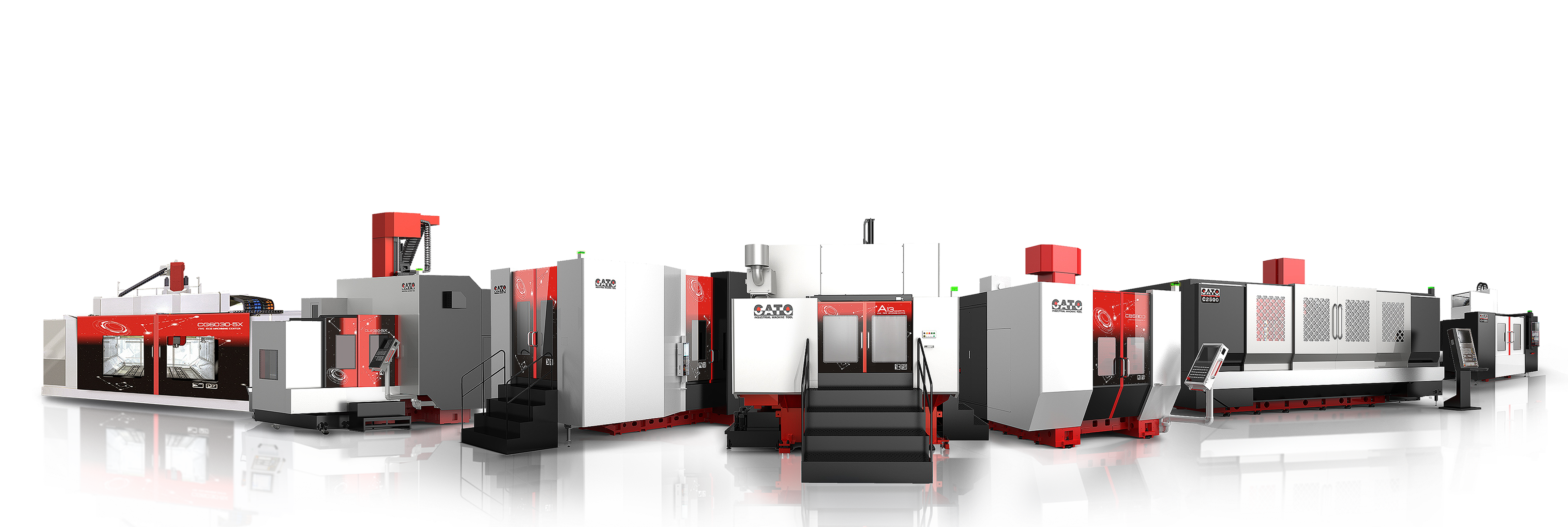
CL Series High Speed Vertical Machining Center CL Series High Speed Gantry Machining Center CHS Series High-speed Removal Machining Center CS Series Gantry Machining Center CT Series Drilling & Milling Machining CenterCP Series Five-axis Horizontal Swing Head Machining Center GF Series Five-axis Fixed Beam Gantry Machining Center CBS Series Five-axis Bridge Machining Center CV Series Five-axis Vertical Machining Center A Series Five-axis Horizontal Cradle Machining Center C Series Five-axis Column Vertical Machining Center GE Series Five-axis Crane Machining Center


Ultimate Guide to 5-Axis CNC Machining: Strategies for Improving Machining Precision of Complex Components
Release time:
2026-03-11
Author:
CATO
Source:
Internet
This is a practical guide to 5-axis CNC machining centers, which breaks down the equipment principles, structures and core advantages, compares the differences with 3-axis/4-axis equipment, and elaborates on its applications in aerospace, automotive, medical, mold and other fields. It also provides practical key points for selection, training and maintenance, offering actionable references for manufacturing practitioners, helping to overcome the challenges of machining complex components and meet the precision and efficiency demands of high-end manufacturing.


1. Differences Between 5-Axis CNC Machining Centers and CNC Multi-Tasking Machining Centers: A Selection Guide
5-axis CNC machining centers represent the advanced technological benchmark in precision manufacturing. This category of equipment includes 5-axis CNC gantry machining centers, CNC vertical machining centers, and other variants, capable of simultaneous motion across five distinct axes. They produce components with complex geometric shapes through intricate motion trajectories, and their core value lies in the efficient production of high-quality machined parts.
The global market size of 5-axis CNC machining centers reached USD 4.738 billion in 2025 and is projected to grow to USD 7.083 billion by 2032. This growth trend fully reflects the ever-rising demand for machining precision in industries such as aerospace and medical devices, with the aerospace sector in particular having an urgent need for high-precision 5-axis CNC machining technology.

5-axis CNC machining technology enables milling of complex curved surfaces, overcoming processing challenges that are insurmountable for traditional manufacturing processes. The advantages of this technology are even more prominent when comparing the applications of 5-axis horizontal center and 5-axis vertical machining centers.
2. Key Points
5-axis CNC machining centers deliver significantly enhanced machining precision, with tolerances controlled within ±0.005mm—an essential standard for industries such as aerospace and medical devices.
The equipment drastically boosts machining efficiency, cutting production time by up to 50% through reduced clamping times and simultaneous multi-axis cutting.
Versatility is a core advantage: 5-axis CNC machining centers can process workpieces of various materials, catering to the diverse processing needs of aerospace, automotive, medical, and other industries.
Selecting a 5-axis CNC machining center requires a comprehensive evaluation of the equipment's technical performance, quality control system, and specific production requirements.
Routine maintenance is critical to ensuring optimal equipment operation. Regular inspections of tool setting accuracy, tool change mechanisms, and cooling systems are necessary to extend the service life of the equipment.
3. Working Principles of 5-Axis CNC Machining Centers
3.1 Motion Types
5-axis CNC machining centers achieve high-precision machining of complex components through a combination of linear and rotational motions, which are primarily divided into three linear axes and two rotational axes, as detailed below:
| Axis | Motion Type | Description |
| X-axis | Linear | The tool moves horizontally along the workpiece |
| Y-axis | Linear | The tool or worktable moves along the depth of the workpiece |
| Z-axis | Linear | The tool moves vertically up and down |
| A-axis | Rotational | The tool or workpiece tilts forward and backward around the axis |
| B-axis | Rotational | The tool or workpiece tilts left and right around the axis |
Through the combination of the above motions, manufacturers can complete the machining of complex components in a single setup. The equipment can machine workpieces from multiple angles, greatly shortening production time and improving machining precision. The characteristic of simultaneous multi-axis motion enhances the machining capability of the equipment, enabling continuous tilting of the cutting tool along curved trajectories. This flexibility not only reduces tool interference but also optimizes the surface finish of workpieces with complex geometric shapes.
3.2 Equipment Configurations
The configuration of a 5-axis CNC machining center plays a decisive role in its performance and application scenarios, with different configurations offering unique advantages and limitations. The common configuration types are as follows:
| Configuration Type | Description | Advantages | Application Scenarios |
|---|---|---|---|
| Trunnion Table | Rotary axes integrated into the trunnion table; spindle fixed | Excellent undercut machining capability, larger effective machining space, higher torque output at low rotational speeds | Aerospace and energy industries |
| Swivel Head | All rotational motions performed by the spindle head; available in double-swivel head and swivel head + turntable types | Capable of machining overweight workpieces, flexible clamping methods | Precision machining requiring tool angle adjustments |
| Table-Table | Workpiece placed on rotary tables; spindle head fixed | Superior rigidity, suitable for heavy cutting | Large aerospace components, energy equipment |
| Head-Head | Rotary axes integrated into the spindle head; workpiece fixed | Ideal for machining complex lightweight components | Medical implants, precision molds |
| Head-Table | Rotary table paired with a tiltable spindle head | High versatility, suitable for machining components of different sizes | Machining of various components with complex geometric shapes |
Each configuration type impacts the efficiency and quality of the machining process. For example, the trunnion table configuration offers excellent support and rigidity, making it suitable for machining heavy workpieces, while the swivel head configuration provides greater flexibility for machining complex geometric shapes that require precise tool angle adjustments.
By understanding the characteristics of various motion modes and configurations, manufacturers can select a suitable 5-axis CNC machining center based on their specific needs, ultimately achieving dual improvements in production efficiency and component machining quality.

4. Advantages of 5-Axis CNC Machining Centers
4.1 Significantly Enhanced Machining Precision
A core advantage of 5-axis CNC machining centers is their ultra-high machining precision, with tolerances controlled within ±0.005mm, making them the ideal choice for high-precision manufacturing. This precision standard is indispensable for industries such as aerospace and medical devices, where even the tiniest machining deviation may lead to serious quality issues. Machining complex geometric shapes in a single setup effectively reduces machining errors caused by multiple clamping operations.
Tip: Adopting 5-axis CNC machining technology allows manufacturers to control machining tolerances within a narrower range, fundamentally improving the overall machining quality of components.
4.2 Drastically Improved Machining Efficiency
5-axis CNC machining centers are far more efficient than traditional machining equipment, cutting the production time of complex components by up to 50%. The equipment can finish machining complex workpieces with fewer clamping times, greatly shortening the production cycle. The characteristic of simultaneous multi-axis motion eliminates the need for repeated clamping and positioning, avoiding the positioning errors common in 3-axis machining equipment.
The core efficiency advantages of 5-axis CNC machining centers are reflected in:
- Simultaneous continuous multi-axis cutting, enabling the machining of complex geometric shapes in a single operation;
- Optimized workpiece clamping and positioning methods, reducing kinematic errors and drastically shortening setup times.
Research shows that optimizing clamping parameters can significantly reduce manufacturing man-hours. Reducing setup times not only increases equipment machining capacity but also allows manufacturers to respond more quickly to market demands.
4.3 Exceptional Machining Versatility
5-axis CNC machining centers offer unparalleled versatility in processing workpieces of various materials. They can efficiently machine high-strength steel, corrosion-resistant alloys, and complex composite materials that are difficult to process with traditional equipment. This performance provides a significant advantage in industries such as aerospace, automotive, and medical devices that require diverse machining materials.
| Industry | Machining Materials | Core Advantages |
|---|---|---|
| Aerospace | Carbon fiber, glass fiber reinforced materials | Unrestricted multi-angle machining, enabling precision trimming and ultra-tight tolerance control |
| Automotive | Various plastics, composite materials | Smooth machined surfaces, enabling rapid design modification and machining of prototype molds and trim parts |
| Marine/Rail Transit | Large-scale molds | Large machining stroke, enabling seamless machining of oversized workpieces |
| New Energy | Epoxy resin, composite structural parts | High-precision machining of long structural parts in a single seamless operation |
The ability to process multiple materials enhances the adaptability of 5-axis CNC machining centers, allowing manufacturers to meet diverse production needs without sacrificing machining quality or efficiency.
5. Comparison with 3-Axis and 4-Axis Machining Equipment
5.1 Core Differences
There are significant differences between 3-axis, 4-axis, and 5-axis CNC machining centers, particularly in terms of motion capabilities and the complexity of processable components. The specific differences are shown in the table below:
| Feature | 3-Axis CNC Machining Center | 5-Axis CNC Machining Center |
| Number of Axes | 3 linear axes (X, Y, Z) | 3 linear axes (X, Y, Z) + 2 rotational axes |
| Tool Machining Angle | Fixed vertical machining angle | The tool can tilt and rotate at any angle |
| Workpiece Clamping | Repeated clamping often required | Multi-face machining achievable in a single setup |
3-axis machining equipment is limited to motion in three directions and cannot process components with complex geometric shapes. 4-axis machining equipment adds a rotational axis, enabling the machining of more complex workpieces, while 5-axis machining equipment offers the ultimate flexibility, capable of machining complex special-shaped parts and minimizing manual repositioning of workpieces to the greatest extent.
5.2 Unique Advantages of 5-Axis CNC Machining Centers
Compared with 3-axis and 4-axis machining equipment, 5-axis CNC machining centers have several irreplaceable advantages:
- Simplified machining process for complex components: The additional rotational axes allow complex workpieces to be machined with fewer clamping times, which is crucial for shortening processing time and reducing production costs;
- Further improved machining efficiency: The equipment can machine workpieces from multiple angles, effectively shortening the machining cycle and increasing production efficiency;
- Stable and consistent machining precision: Strict tolerance control is maintained during the machining of complex geometric shapes, ensuring that components fully meet machining standards—an essential requirement for industries with stringent precision demands;
- Optimized workpiece surface finish: Continuous tool motion results in smoother machined surfaces, reducing the need for subsequent secondary processing and saving time and machining resources.
5-axis CNC machining completes multiple machining processes in a single setup, reducing manual intervention, which not only streamlines the production process but also improves machining consistency. At the same time, reduced manual operation also lowers the possibility of human error, drastically boosting production efficiency.
6. Industry Application Scenarios

6.1 Aerospace Industry
5-axis CNC machining centers are core processing equipment in the aerospace industry and a necessity for producing high-precision components with complex geometric shapes such as turbine blades and engine parts. Their industrial value is mainly reflected in:
- The twisted airfoil structure of turbine blades can only be achieved through 5-axis continuous interpolation machining;
- 5-axis CNC machining technology ensures high surface quality and dimensional accuracy of components, which is critical to the performance and safety of aerospace products.
6.2 Automotive Industry
In the automotive industry, 5-axis CNC machining centers drive the production and machining of automotive engine components with complex geometric shapes, with main application scenarios including:
- High-precision machining of precision components such as cylinder heads, gearboxes, and drive axles;
- Machining of molds with deep cavities and undercut structures, improving the overall efficiency and precision of mold machining.
The advantages of applying 5-axis CNC machining technology in automotive manufacturing are remarkable:
| Advantage | Improvement Range |
|---|---|
| Reduced clamping times | 70%-80% fewer fixture changes |
| Extended tool life | 25%-40% longer tool service life |
| Optimized machining quality | Repeat positioning accuracy up to ±0.0002 inches |
| Improved labor efficiency | Reduced manual intervention by operators |
6.3 Medical Device Industry
In the medical device industry, which has extreme precision requirements for machining, 5-axis CNC machining centers occupy a core position. They can machine complex geometric shapes in a single setup and are a key technology for the production of high-end medical devices. Their core advantages include:
- Machining tolerances can be controlled at the micron level, which is critical to ensuring the functionality and safety of medical devices;
- Capable of machining complex special-shaped structures and features that are difficult to process efficiently with traditional manufacturing processes.
The high precision of 5-axis CNC machining has a significant impact on the quality and safety of medical implants. For example, reduced manual intervention ensures precise alignment and strict tolerance control of implants, which is particularly important for implants such as hip joints and bone plates—even a tiny machining deviation may endanger patient safety.
Note: 5-axis CNC machining achieves excellent surface finish, reducing the need for manual polishing and drastically shortening the production cycle.
6.4 Mold Manufacturing Industry
5-axis CNC machining centers have revolutionized the traditional production mode of the mold manufacturing industry, significantly improving the precision and efficiency of mold machining. The equipment can machine workpieces from any angle without repositioning, a performance that greatly boosts operational efficiency, not only significantly shortening machining time but also reducing machining errors, making it a core competitive equipment in the mold manufacturing industry.
The core advantages of 5-axis CNC machining centers in the mold manufacturing field are as follows:
| Advantage | Description |
|---|---|
| Improved machining precision | Machining tolerances controllable at the submicron level, suitable for high-demand machining scenarios |
| Shortened machining cycle | Increased machining speed through tangential cutting, reducing the machining time of complex components by 25%-50% |
| Extended tool life | Optimized cutting angles reduce tool wear and extend tool service life |
| Increased production efficiency | Machining completed in a single setup without repositioning, reducing machining errors and downtime |
In mold manufacturing, completing the machining of complex geometric shapes in a single setup is crucial. 5-axis CNC machining centers can machine complex molds in one setup, saving time and labor costs, while drastically shortening the delivery cycle of prototype molds and custom molds.
Its core advantages are also reflected in:
- Elimination of multiple clamping: Multi-angle machining achievable in a single setup, reducing downtime;
- Increased cutting speed and efficiency: High precision optimizes cutting paths, reducing idle travel and improving production efficiency;
- Optimized surface finish: Strict tolerance control reduces the need for subsequent finishing processes, further shortening the production cycle.

After manufacturers introduce 5-axis CNC machining technology, their production capacity will be significantly enhanced. This technology not only improves the machining quality of molds but also accelerates the overall manufacturing process, ensuring on-time product delivery and improving customer satisfaction.
7. Practical Key Points for Equipment Application
7.1 Selecting the Right Equipment
Selecting a suitable 5-axis CNC machining center is the key to meeting the specific production needs of an enterprise. The following criteria should be considered during selection:
| Selection Criterion | Description |
|---|---|
| Technical Performance | Evaluate the supplier's high-end 5-axis CNC machining equipment to confirm its capability to machine components with complex geometric shapes |
| Quality Control System | Inspect whether the supplier is equipped with advanced testing equipment such as coordinate measuring machines and 3D scanners to ensure machining and testing precision |
| Industry Experience | Understand the supplier's track record in component machining for industries with high precision requirements |
| Specific Requirements | Ensure the equipment can adapt to the enterprise's specific component dimensions and production capacity needs |
In addition, manufacturers need to evaluate whether the equipment aligns with production goals based on workpiece dimensions, machining materials, and precision requirements.
7.2 Operator Training and Skill Development
Providing professional training for operators of 5-axis CNC machining centers is critical to improving equipment performance and operational safety. A professional training system should include:
- Advanced training in 5-axis CNC programming and precision calibration: Focus on mastering programming skills and precision calibration methods;
- Fundamentals of 5-axis CNC programming: Cover core programming knowledge such as tool path planning;
- CAM software training: Explain practical skills for equipment setup and programming;
- Laser interferometer training: Master skills for equipment precision testing;
- Equipment precision diagnosis: Cultivate the ability to evaluate equipment operational performance and develop maintenance plans.
Such professional training enables operators to fully exploit the technical advantages of the equipment, directly improving the efficiency and safety of machining processes.
7.3 Equipment Maintenance and Upkeep
Regular maintenance is critical to ensuring the optimal operation of 5-axis CNC machining centers and extending their service life. The following practical key points should be implemented:
- Clean and lubricate the automatic tool change mechanism in accordance with the manufacturer's requirements to ensure smooth operation;
- Conduct regular high-precision calibration and testing of the equipment's axes, and correct any misalignment in a timely manner;
- Inspect ball screws and linear guides for wear, damage, or contamination, and clean and lubricate them in accordance with the manufacturer's specifications;
- Conduct a comprehensive inspection of the cooling system, including pumps, filters, pipelines and other components, and replace worn or damaged parts in a timely manner.
Implementing the above maintenance key points allows manufacturers to reduce equipment maintenance costs and extend the service life of the equipment by up to 20%. Regular inspections and systematic preventive maintenance are the keys to ensuring the long-term stable and efficient operation of CNC equipment.
5-axis CNC machining centers are core equipment in modern manufacturing. Their ability to machine complex components with high precision has drastically improved the production and operational efficiency of enterprises. Core advantages include shortened setup times, optimized workpiece surface finish, and the ability to process multiple materials. Industries such as aerospace, automotive, and medical devices have all benefited greatly from this technology.
As manufacturers continue to adopt 5-axis CNC machining technology, it will unlock enormous technological potential, drive industrial innovation, and enhance the market competitiveness of enterprises.
Frequently Asked Questions
1. What is a 5-axis CNC machining center?
A 5-axis CNC machining center enables simultaneous motion across five axes, allowing the cutting tool to move synchronously in multiple directions. With this performance, it can machine components with complex geometric shapes with high precision and efficiency.
2. How does 5-axis CNC machining improve production efficiency?
5-axis CNC machining can complete multi-face machining of a workpiece in a single setup, drastically shortening clamping times and reducing manual repositioning of the workpiece, thereby lowering overall production time.
3. Which industries can benefit from 5-axis CNC machining technology?
Industries such as aerospace, automotive, medical devices, and mold manufacturing can all benefit significantly from 5-axis CNC machining technology, as these industries have high demands for the machining of high-precision and complex components.
4. What materials can be machined with 5-axis CNC machining technology?
5-axis CNC machining centers can process a variety of materials, including metals, plastics, composite materials, and alloys. This versatility allows manufacturers to meet diverse production needs.
5. How to maintain a 5-axis CNC machining center?
Routine equipment maintenance includes inspecting the tool setting accuracy of the axes, testing the condition of ball screws, and ensuring the normal operation of the cooling system. Strictly following the manufacturer's maintenance specifications can effectively extend the service life of the equipment and ensure its optimal operation.

Key words:
Latest information

Official Wechat
Mobile phone official website
Online Message
Leave your contact information and needs, we will arrange for professionals to contact you
Quick Navigation
Contact Us
Add.: No.1, Dongye Road, Houjie Town, Dongguan City, Guangdong Province, China
Tel: +86-769-38825288
WeChat: CATO54321
Fax: +86-769-38825138
E-mail: marketing@catocnc.cn
Web: http://www.catocnc.com
Service Hotline: +86-400-680-6638